

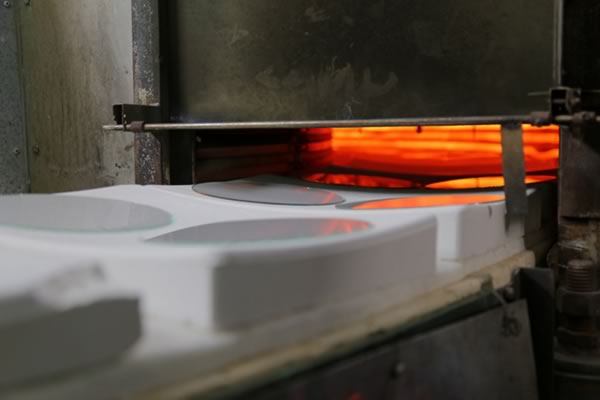
On the bending line, the furnace profile isn’t a background parameter. It sets the stress distribution in the glass, period. If the heating zones drift or the thermal field gets uneven, you’ll see optical distortion, roller wave, and edge roll-off. And you’ll see scrap that should have shipped. Here’s how we keep it honest. We build the furnace temperature system around repeatable heat input and a tight, stable thermal field. The heating elements are matched to the chamber geometry, and the control loops hold setpoints with minimal overshoot. The real target is consistent glass surface temperature across the whole load — not just where the thermocouple happens to sit. We also keep convection turbulence and radiant hot spots in check, because that’s where non-uniform bending starts. In bending, yield hinges on hitting the softening window quickly and evenly. Precise furnace control shortens the heating segment and stabilizes the dwell, so the glass takes the mold without excessive creep or springback. The payoff is fewer optical defects, less rework, and a cycle time you can plan around. Energy use drops too, because the furnace isn’t constantly chasing big temperature swings. This performance only holds if the sensors are clean, placed correctly, and the insulation is in good shape. Worn door seals or poorly positioned thermocouples feed the controller bad signals, and the profile drifts. Install with the furnace manufacturer’s clearances in mind, and stick to a calibration schedule. On high-throughput lines, that maintenance discipline is what keeps output stable — and keeps the unexplained rejects from piling up.