

Out on the line, glass doesn’t care about theory—it needs heat, and it needs it fast and even. When the heating profile wanders, you start paying for it: optical distortion, thermal stress cracks, edges that don’t hold after tempering. And then the real pain hits—scrap, rework, and energy use that climbs for no good reason.
What actually matters on the machine
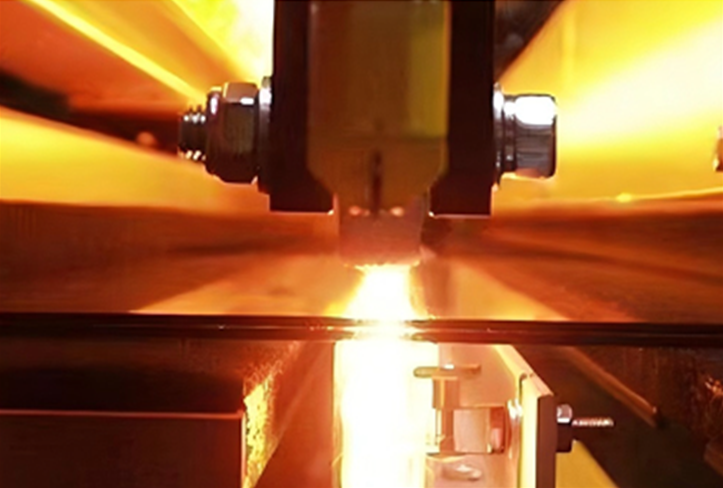
We set the infrared wavelength to match the glass emissivity so the energy goes into the surface layer—where it needs to go—instead of reflecting off or dumping heat into the furnace structure. For a lot of float and coated glasses, the near-infrared (NIR) band around 0.8–1.4 µm gives you direct coupling that’s fast, which shortens ramp time and keeps the soak tight. The quartz envelope matters, too. It holds up chemically in high-humidity ovens and takes repeated thermal cycling without falling apart. Power density is tuned to the process window: enough punch to hit setpoint quickly, but controlled enough to avoid hot spots and edge overheat. The payoff is consistency—less variation across different pane sizes and coatings, and output that repeats shift after shift.
Why this matters in tempering, bending, and coating drying
In tempering, bending, and coating drying, the scoreboard is simple: seconds, kilowatts, and yield. Shorter heat-up cuts cycle time and boosts throughput without forcing the furnace to work harder. Tighter temperature uniformity means fewer optical defects and fewer breaks caused by uneven expansion, so first-pass yield improves. Energy use drops because the heat is absorbed directly where it needs to be, not wasted heating air and fixtures. And because the module is designed as a direct-fit upgrade, maintenance stretches out and downtime shrinks. We’ve seen lines run 5,000+ hours with minimal output drift, and in well-matched applications, energy draws drop by double digits.
What you need to get right on install
Installation is straightforward, but the control strategy has to match the heater. It performs best with PID or closed-loop control tied to a pyrometer or thermocouple zone mapping—open-loop duty cycles can miss the mark and drift over time. Double-check voltage, amperage, and connector compatibility with your existing terminals and busbar. Also confirm clearance to glass and reflectors. NIR systems are efficient, but radiant heat can still affect nearby components if the layout is too tight. Plan the retrofit around your changeover profiles, and the results will be consistent—measurable, repeatable, and earned the way we like: on the line.