Getting the Heat Right for Specialized Glass
If you’re working with train window glass, you already know it’s a different beast than the standard float glass you find in a home. It’s packed with additives—stuff for safety, UV protection, or keeping the cabin warm. But here’s the catch: those additives change how the glass handles heat. If your infrared lamps are pumping out energy at a wavelength your glass just doesn’t “see,” you’re basically throwing money away. You aren’t heating the glass; you’re just warming up the walls of your oven.
Hitting the Sweet Spot
It all comes down to physics. Every chemical bond in your glass has its own specific “vibe,” or resonance frequency. If the lamp doesn’t match that frequency, the energy just bounces off the surface. We fix this by tuning the IR spectrum to hit the exact absorption peaks of your specific glass chemistry. By tweaking the emitter materials and adding specific coatings, we shift the light so it actually sinks into the glass. It’s the difference between a light bouncing off a mirror and a sponge soaking up water.
How we actually do it
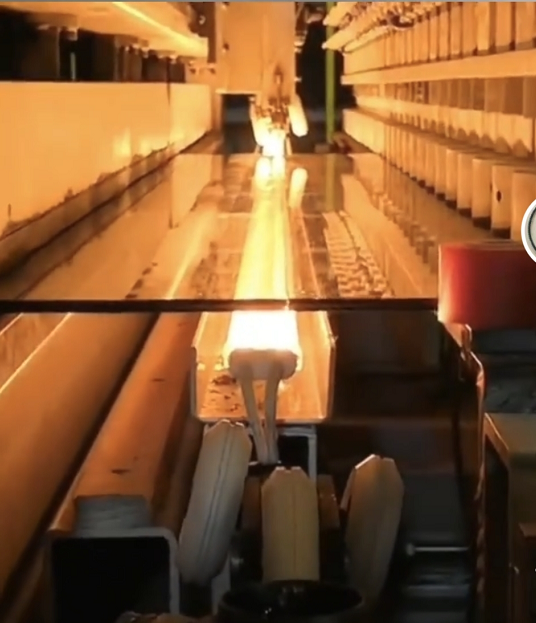
We don’t just hand you a generic bulb and wish you luck. We get into the weeds with the filament composition and the dopants in the quartz envelope to narrow or widen the emission band. For train glass, we usually zero in on specific mid-wave or short-wave bands. The process is simple: you send us the absorption spectrum of your glass, and we build a lamp that aligns perfectly with it. When the energy transfer is direct, your glass spends way less time sitting in the annealing lehr. That’s a win for your timeline and your electric bill.
The Trade-off
Now, there is one thing to keep in mind. These narrow-band lamps are a bit more sensitive. If your voltage starts drifting, the spectral shift can happen, and your heating efficiency drops. It’s not a huge deal, but you’ll want a stable power controller to keep everything locked in at the right temperature. We build these for the long haul—high-duty cycles, heavy use. When you get the spectrum dialed in, the glass hits its annealing point faster. No more worrying about surface deformation, and a lot less wasted energy.