
Why “Off-the-Shelf” IR Lamps Usually Fail in Glass R&D
If you’re working on new glass materials, you’ve probably realized that a standard IR lamp just doesn’t cut it. You can’t just plug in a generic part and hope for the best. One wrong move with your thermal profile and you’re looking at cracked samples or curing that’s all over the place. That’s why we build gold-coated shortwave IR lamps. They’re made for the kind of precision you actually need in a lab.
The magic of the gold coating
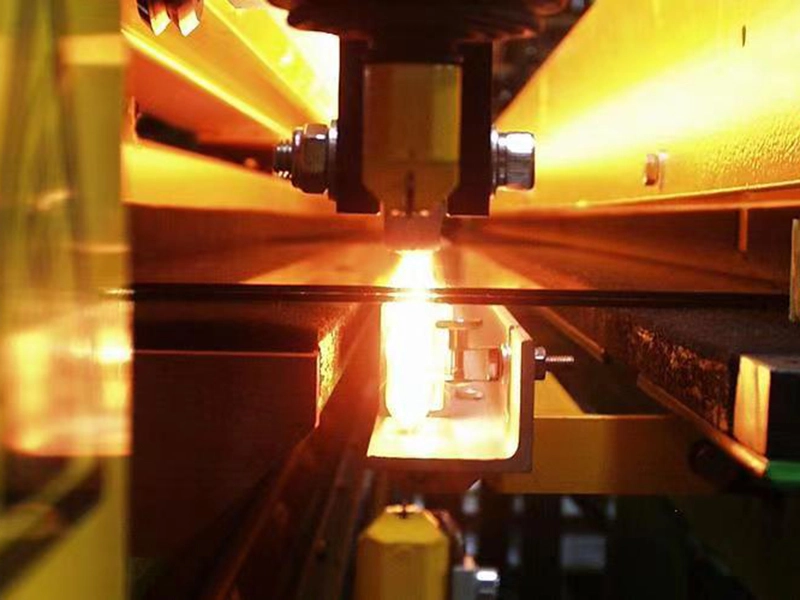
Here is the deal with standard quartz tubes: they waste a ton of energy. A lot of that heat just disappears into the air. We fix that by adding a thin layer of gold to the quartz. It acts like a mirror, bouncing the infrared radiation forward and slamming it directly into your substrate. You get a massive punch of heat exactly where you want it, without having to crank up the wattage and bake your other equipment in the process.
It’s all about the power density
Most suppliers will ask you for the length and the wattage, and then they stop there. But in glass R&D, a perfectly “even” heat spread is rarely what you actually want. Sometimes you need a concentrated hot spot right in the middle. Other times, you need the heat to ramp up gradually across the tube. We handle this by changing how the filament is wound. You can tell us exactly how many Watts per centimeter you need for your material transition. It’s a huge relief—you don’t have to worry about the edges of your glass overheating while the center is still cold.
The honest trade-offs
Now, there’s a catch. High power density isn’t free. If you try to squeeze extreme wattage into a tiny footprint, the filament has to run dangerously close to its melting point. This means the lamp won’t last as long. You’ll also need to make sure your cooling fans or water-jackets are up to the task. If you don’t manage the heat soak at the ends of the tube, you’re going to burn out your seals. We give you the exact parameters, and you handle the wiring. It’s a straightforward way to keep iterating on your glass chemistry without your hardware holding you back.