




Why Fast-Acting IR Heaters are a Lifesaver for Glass Lines
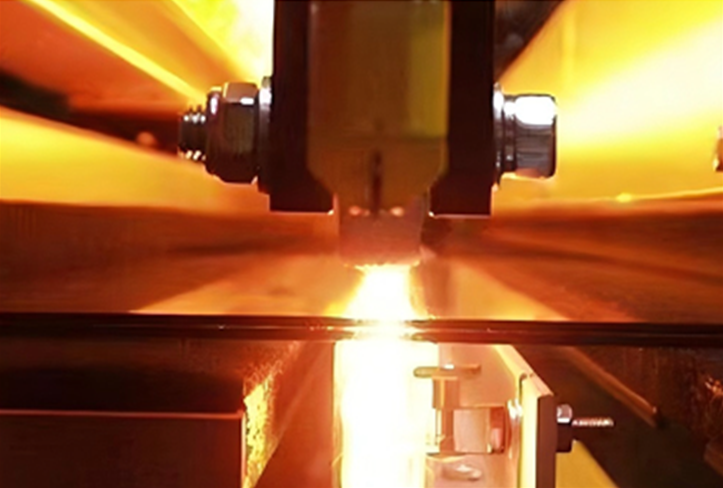
If you’ve ever worked with glass annealing, you know the stress. You’re trying to get rid of internal tension without accidentally cracking the whole piece. In a continuous production line, you just don’t have time to wait around for a convection oven to warm up the air. It’s too slow. That’s why we use shortwave infrared (IR) lamps. Instead of heating the air and hoping that heat eventually reaches the glass, these lamps beam energy straight into the surface. It’s direct. It’s immediate. The beauty of a quick response Most heating elements take forever to hit their target temperature. These IR lamps? They’re ready in seconds. This gives you a huge amount of control. If you’re suddenly running thicker glass, you can crank the heat up. Running thinner sheets? Drop the temp instantly. You don’t have to stop the line or pray that the glass doesn’t shatter from thermal shock while it’s flying down the conveyor. It just works. Fitting it into your floor plan Space is always at a premium on the factory floor. You don’t want a heating tunnel that stretches for miles. We design these units to pack a lot of power into a small footprint. By focusing the IR spectrum, the heat sinks into the glass quickly and evenly. It’s the only real way to keep things steady when your product is constantly moving. The “Catch” (and how to handle it) Here’s the thing: when you’re pushing this much heat, things get hot. Really hot. That massive heat flux is great for production speed, but it’s tough on your gear. If your cooling manifolds aren’t up to the task, you’re going to run into trouble. We’ve seen lamp sockets burn out and support frames warp because the ambient heat had nowhere to go. Don’t let that be you. To get the best results, we usually pair these lamps with a laser pyrometer and a closed-loop PID controller. It basically lets the system “see” the temperature of the glass in real-time and tweak the power on the fly. You stay right in that sweet spot for annealing without accidentally hitting the softening point and ruining your batch.